
The 10 mosquito species you can play
Mosquito Simulator: Bite & Run has 10 playable mosquitoes, and every one is a real species or genus: Culex, Aedes aegypti, Anopheles, the Asian tiger mosquito, the gallinipper, Culiseta, Wyeomyia, Deinocerites, Sabethes cyaneus and Toxorhynchites. Each in-game bonus comes from a real trait, such as the gallinipper's size or Sabethes' speed. Two are free, five are earned with Blood and three are optional purchases.
How do the species compare?
Values are relative to Culex, the balanced baseline (100%). “Buzz” is how loud you are: lower is quieter, so sleepers notice you later. “Itch delay” is how long a bite goes unnoticed. Data from game version 1.0, checked 24 November 2026; balance may change in updates.
| Species | Real-world trait | In-game strengths | Trade-offs | How to get it |
|---|---|---|---|---|
| Culex | Common house mosquito, active from dusk to dawn | Balanced baseline | None | Free |
| Aedes aegypti | Lyre-shaped silver pattern, white-banded legs | Speed +15%, acceleration +15%, bite speed +10% | Blood capacity −15%, buzz +5%, itch comes 10% sooner | Free |
| Anopheles | Rests with its abdomen tilted up; the only genus that carries human malaria | Buzz −38%, itch delay +15% | None | 1,600 Blood, or the Starter Nest offer |
| Asian tiger | One white stripe down the back | Acceleration +20%, bite speed +20%, speed +10%, buzz −5% | Blood capacity −5%, itch comes 10% sooner | 1,400 Blood |
| Gallinipper | Very large, shaggy legs, painful bite | Blood capacity +60%, survives one slap | Speed −22%, acceleration −20%, buzz +35%, bite speed −10% | 1,000 Blood |
| Culiseta | Large and cold-hardy; adults survive the winter | Blood capacity +35%, itch delay +20%, longer heat sense | Speed −8%, acceleration −5%, buzz +10% | 1,200 Blood |
| Wyeomyia | Tiny; breeds in pitcher plants | Buzz −65% (quietest), +1 dash, acceleration +25% | Blood capacity −30% | 1,800 Blood |
| Deinocerites | Lives in crab burrows; males have very long antennae | Locks onto breath twice as fast, longer heat sense, buzz −20%, itch delay +20% | None | Purchase (US$2.99) |
| Sabethes cyaneus | Iridescent blue with feathery leg paddles | Speed +20%, acceleration +35%, +2 dashes, bite speed +15% | None | Purchase (US$4.99) |
| Toxorhynchites | The elephant mosquito, among the largest; adults never drink blood | Blood capacity +40%, bite speed +35%, itch delay +40%, survives one slap, +1 dash | Buzz +20% | Purchase (US$6.99) |
The three purchasable species are also sold together as the Species Collection (US$9.99). US prices as of 24 November 2026; the App Store shows the price in your currency. In Online 1 vs 3, species are cosmetic only.
Culex: the house mosquito
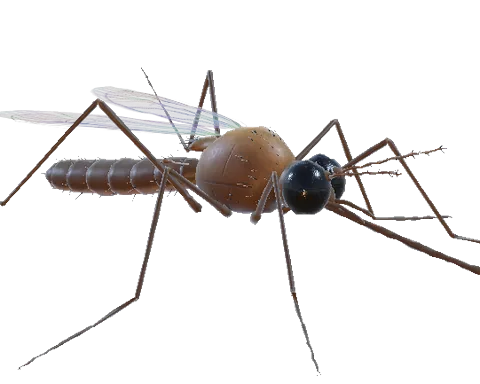
In real life: Culex pipiens, the northern house mosquito, is most active from dusk to dawn and prefers to feed on birds, which is how it keeps West Nile virus circulating; people are occasional hosts (ECDC).
In the game: the balanced baseline every other species is measured against; the game describes it as the one that “finds your ear at 3 a.m.” Free from the start.
Aedes aegypti: the yellow fever mosquito
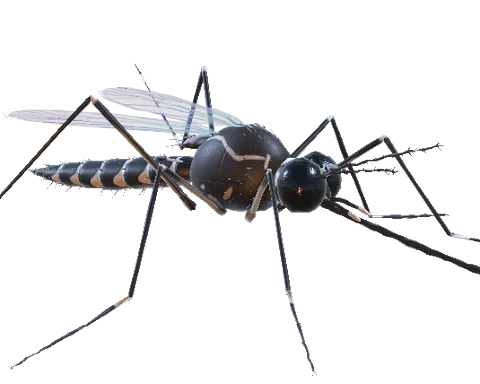
In real life: a dark mosquito with a silvery, lyre-shaped pattern on its back and white bands on its legs, at home in towns and cities. It spreads dengue, Zika, chikungunya and yellow fever viruses (CDC).
In the game: quick and agile, with a fast bite, but its tank is 15% smaller and the itch arrives sooner. Free from the start.
Anopheles: the malaria mosquito
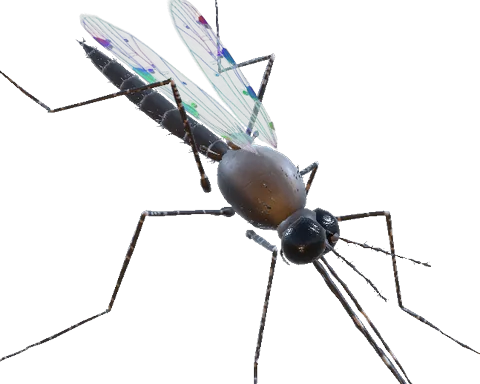
In real life: human malaria is transmitted only by female Anopheles mosquitoes; of about 430 species, 30 to 40 carry it. You can spot one at rest: it holds its abdomen sticking up in the air instead of parallel to the surface (CDC).
In the game: a stealth species. Its buzz is 38% quieter and its bites go unnoticed 15% longer. Costs 1,600 Blood, or comes in the one-time Starter Nest offer.
Asian tiger mosquito (Aedes albopictus)
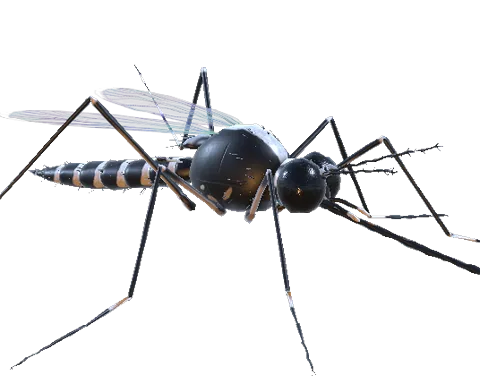
In real life: black with white leg bands and a single silvery stripe running down its back. It has spread far beyond Asia. Because it feeds on animals as well as people, the CDC rates it a less efficient spreader of viruses than Aedes aegypti (CDC).
In the game: the fastest biter among the Blood species: bite speed +20%, acceleration +20%. Costs 1,400 Blood.
Gallinipper (Psorophora ciliata)
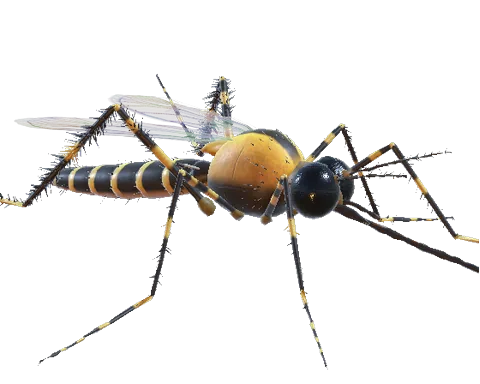
In real life: one of the largest mosquitoes in eastern North America, with shaggy hind legs and a painful bite. Its eggs can wait in dry soil for years until a flood hatches them, and its larvae are predators that eat other mosquito larvae (University of Florida).
In the game: a flying tank: 60% more blood capacity and it survives one slap, but it is slow and loud. Costs 1,000 Blood.
Culiseta: the winter mosquito
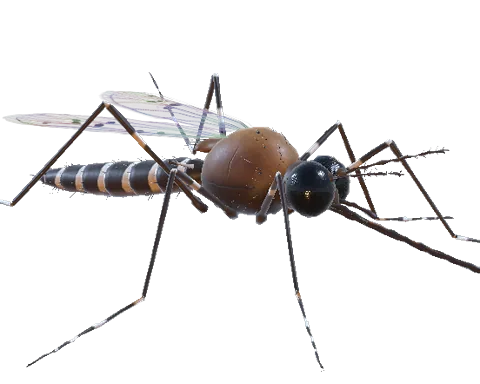
In real life: Culiseta inornata, the winter marsh mosquito, is one of the larger species in California at up to about 10 mm, and its females survive the cold season as adults in sheltered places (Walter Reed Biosystematics Unit; Napa County Mosquito Abatement District).
In the game: a big tank (+35%), bites that stay unnoticed 20% longer and a longer heat sense, paid for with a slightly slower, louder flight. Costs 1,200 Blood.
Wyeomyia: the pitcher-plant mosquito
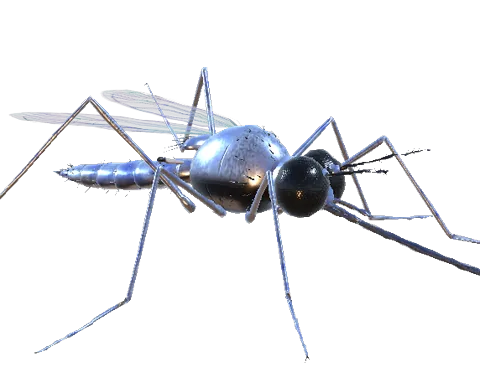
In real life: Wyeomyia smithii grows up in the water held inside pitcher plants. Its northern populations do not bite at all: females lay their eggs without a blood meal (Animal Diversity Web).
In the game: the quietest mosquito in the roster (buzz −65%) with an extra dash, but a 30% smaller tank. Costs 1,800 Blood.
Deinocerites: the crabhole mosquito
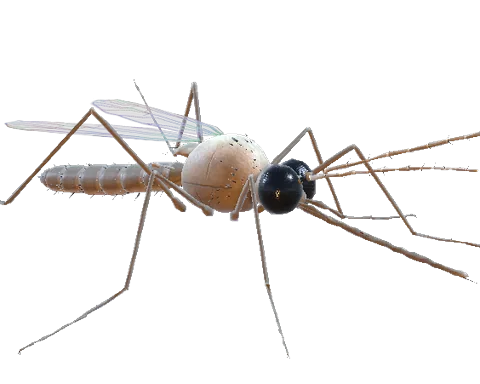
In real life: all 18 species live with land crabs: larvae develop in the water at the bottom of crab burrows and adults rest higher up in the burrow. Males have unusually long antennae, which they use to sense pupae at the water's surface. They are mainly tropical and are not important pests of people (University of Florida).
In the game: those long antennae become a scent specialist: it locks onto breath plumes twice as fast and senses heat from further away. Optional purchase.
Sabethes cyaneus: the jewel mosquito
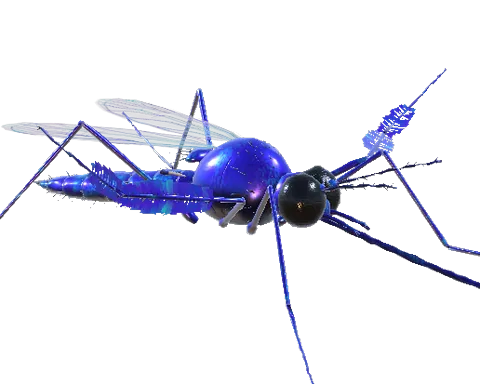
In real life: covered in iridescent blue scales, with paddles of long scales on its middle legs in both sexes. It flies by day in the forest canopy of Central and South America (University of Florida).
In the game: the fastest mosquito: speed +20%, acceleration +35% and two extra dashes. Optional purchase.
Toxorhynchites: the elephant mosquito
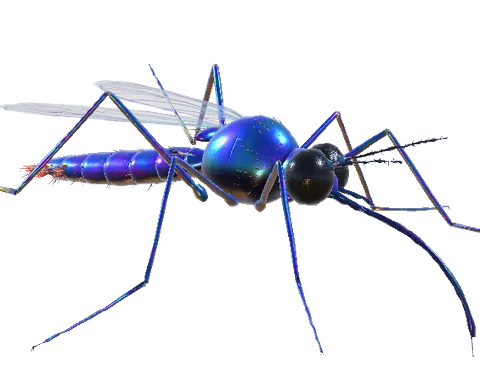
In real life: one of the largest mosquitoes, with a downward-curved proboscis. The twist: adults never drink blood. They feed on nectar and other sugars, and their larvae eat other mosquito larvae, which is why they have been studied for mosquito control (University of Florida).
In the game: we gave the gentle giant a vampire's job anyway: the biggest tank after the gallinipper, the fastest bite, it survives a slap and has an extra dash, but it is loud. Optional purchase.
Which species should you pick?
- Learning the game: Culex. No weaknesses to manage.
- Stealth and three-star “ghost” runs: Wyeomyia or Anopheles.
- Big blood targets: gallinipper or Culiseta.
- Fast, risky play: Aedes aegypti, the Asian tiger or Sabethes.
Want the science behind the scent bonuses? Read how mosquitoes find people.
Free · iPhone · iOS 15 or later · Android not announced